
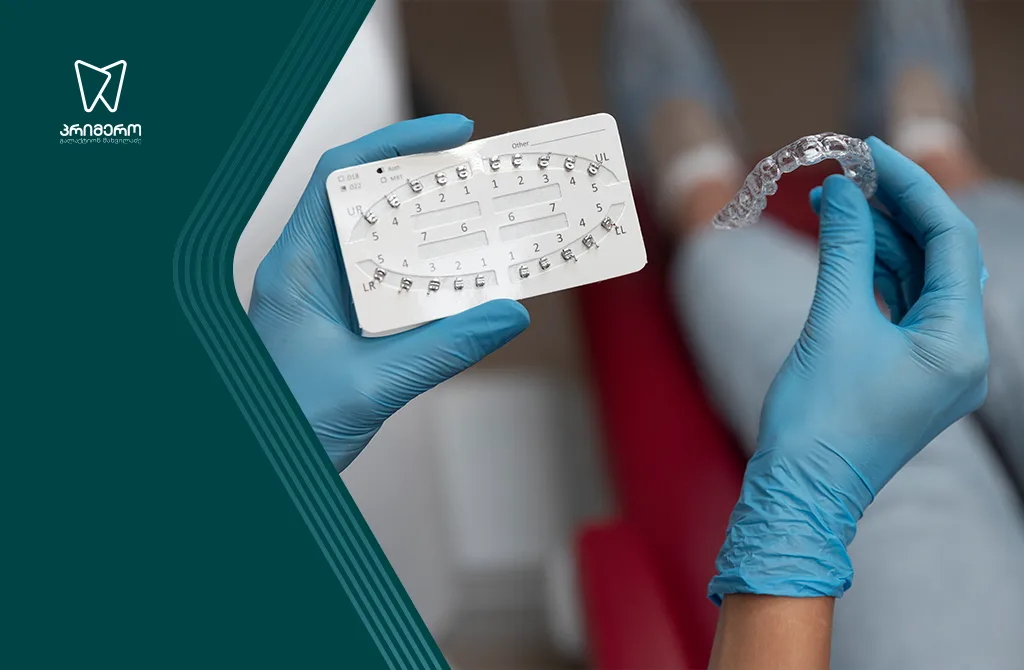
If braces were once the only way to straighten teeth, clear aligners – transparent trays – are becoming increasingly popular in orthodontics today. Treatment with aligners is a far more comfortable and aesthetic alternative, because alongside being effective, it is almost entirely unnoticeable.
What is a clear aligner?
An aligner is a transparent tray that gradually changes the position of the teeth. Its shape and dimensions are designed individually using digital 3D technology, which allows treatment to proceed as effectively as possible.
Aligners are made from a transparent, durable and biologically safe material. In addition, unlike traditional braces, they have no metal components, which makes them practically invisible while speaking and smiling. Straightening teeth with invisible trays is especially popular among adult patients who want the treatment process to be visually less noticeable.
Another significant advantage of aligners is that they can be removed. The patient can take the trays out while eating, drinking and brushing their teeth, which makes maintaining oral hygiene considerably easier. At the same time, unlike with braces, food debris accumulates less in the appliance, which reduces the risk of cavities and gum inflammation.
Meet our dentists and book your visit in advance.
How does aligner treatment work?
Aligner treatment begins with a consultation with an orthodontist, during which the specialist assesses the condition of the patient’s teeth and bite. The initial visit is particularly important, because it is at this stage that it is determined how effective straightening teeth with aligners will be for that specific patient.
Orthodontic services include:
- Diagnostics and 3D scanning – one of the most important stages of treatment is modern digital diagnostics. With the help of a specialized 3D scanner, a precise digital model of the teeth is created, providing complete information about the condition of the patient’s oral cavity. Unlike traditional impressions, 3D scanning is a much more comfortable and faster process.
- Fabrication of individual aligners – each aligner is created specifically for the individual patient and fits the shape and position of the teeth precisely.
Over the course of the full treatment process, several different trays are usually produced, since each of them is calculated for a specific stage of tooth movement.
- Changing the trays in stages – during treatment, the orthodontist replaces the aligners step by step. On average, each tray is used for one to two weeks.
- Regular monitoring – periodic visits to the orthodontist are essential during aligner treatment. At these check-ups, the specialist verifies whether the teeth are moving correctly. In some cases, the treatment plan may need to be adjusted or additional trays produced.
How long does treatment last?
The duration of aligner treatment depends on the complexity of the problem, the condition of the teeth and the patient’s discipline. In mild cases the result may become noticeable within a few months, while with more complex orthodontic problems treatment usually lasts 12 to 18 months.
For successful treatment and a faster result, it is important that the patient wears the aligner for approximately 20 to 22 hours a day. Removing them is recommended only while eating, drinking and carrying out hygiene procedures.
Today, straightening teeth with aligners – with the help of modern technology and high-quality materials – is effective for both mild and moderately complex orthodontic problems.
Why do patients choose aligners?
Aligners have many advantages, which is why they are becoming an increasingly popular choice in modern orthodontics among young people and adult patients alike. These advantages are:
- Aesthetics – because of the transparent material, they are practically unnoticeable. This is especially important for adults and for socially active people.
- Comfort – aligners contain no metal components or wires, which significantly reduces discomfort and the likelihood of irritating the soft tissue. The adaptation period is usually short and most patients get used to them quickly.
- Easy hygiene – aligners can be removed while eating, drinking and brushing the teeth. The patient can use a toothbrush, floss and other hygiene products as usual, which reduces the risk of developing cavities, plaque and gum inflammation.
- A predictable result – if a dental clinic is equipped with modern digital technology, then treatment and the forecast of its result are as precise as possible. This gives the patient more motivation to maintain discipline and support the treatment process.
- A flexible daily routine – aligners are especially convenient for those with an active lifestyle. They do not restrict eating, since the trays can be removed during meals. The patient does not have to avoid certain foods, which is often necessary with braces.
- Fewer visits to the clinic – during aligner treatment, visits to the dentist are usually relatively infrequent, which is particularly comfortable for people with a busy schedule.
When is aligner treatment recommended?
This dental service is recommended for various types of orthodontic problems. These include:
- Misaligned teeth – a problem of this kind affects not only the aesthetics of the smile but the health of the oral cavity as well. The point is that misaligned teeth are harder to clean, which increases the risk of developing cavities and gum disease.
- Gaps between the teeth – many patients are troubled by excessive spaces between the teeth, which may be caused by genetic factors as well as by tooth loss or jaw structure. Beyond the aesthetic side, large gaps between the teeth sometimes complicate chewing and encourage the accumulation of food debris.
- A disrupted bite – in this case the upper and lower teeth do not meet each other correctly. This may lead to uneven wear of the teeth, an incorrect distribution of load on the jaw and, in some cases, pain as well.
Caring for aligners
In order for treatment to be effective and for aligners to retain their shape and transparency, daily and correct care is essential. Incorrect hygiene may also cause an unpleasant odor, a build-up of bacteria and, as a result, problems in the oral cavity.
Caring for aligners involves several important rules, which are:
- Cleaning the trays daily – aligners should be cleaned every day, for which a soft brush and warm water or a special solution is sufficient.
- Protecting them from hot water or drinks – hot water may deform an aligner so that it no longer fits the teeth correctly.
- Removing aligners while eating – food may damage or discolor the trays, and sugary drinks may encourage the build-up of bacteria.
- Storing aligners correctly – it is advisable to place the trays in a special container once removed, so that they are protected from damage and contamination.
If you would like to achieve the result you want as quickly and comfortably as possible, visit us at Primero. See our contact information and get in touch with us in advance.